
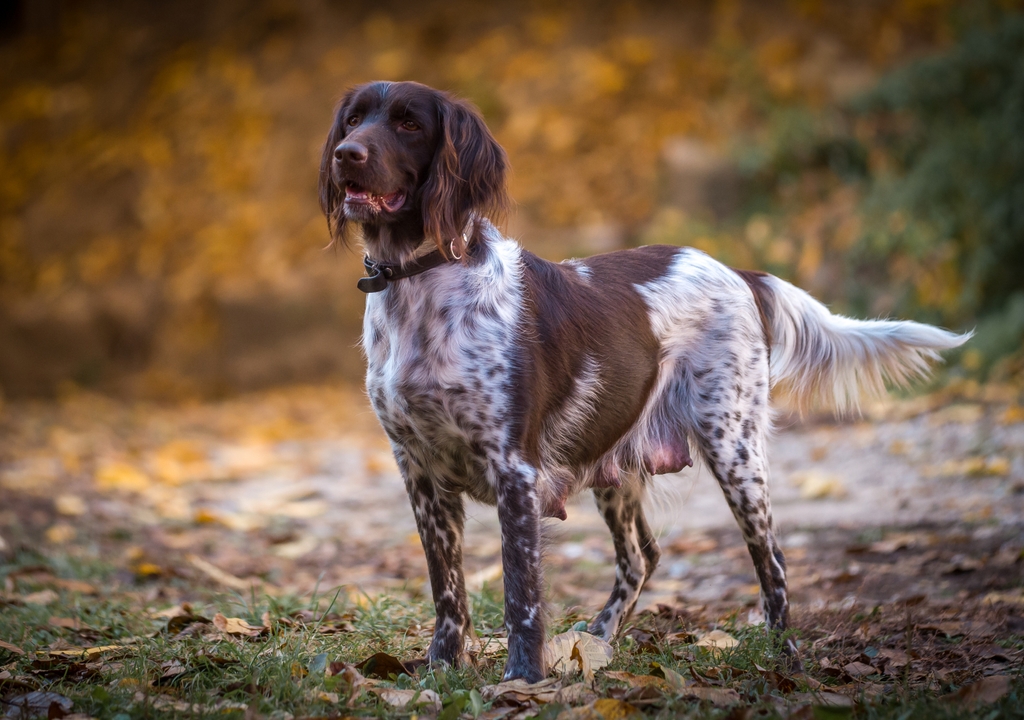
The Small Munsterlander is a versatile hunting dog and natural retriever with a medium range, solid pointing instinct, and strong desire for the water. The Small Munsterlander was developed in Germany in the 19th century to be a versatile hunting dog that could hunt upland gamebirds and waterfowl as well as track and find small and big wounded game animals. The breed is named after the German state of Bavaria, where the breed was developed, and the word “Munsterlander” refers to the dogs’ hunting style of working close to the hunter. The Small Munsterlander is an intelligent, active, and loving hunting dog that makes a great companion for an active family. If you are considering adding a Small Munsterlander to your family, here is what you need to know about the history, characteristics, and care of this wonderful breed.
The Small Munsterlander was developed in Germany in the 19th century to be a versatile hunting dog that could hunt upland gamebirds and waterfowl as well as track and find small and big wounded game animals. The breed is named after the German state of Bavaria, where the breed was developed, and the word “Munsterlander” refers to the dogs’ hunting style of working close to the hunter. The Small Munsterlander is an intelligent, active, and loving hunting dog that makes a great companion for an active family.
The Small Munsterlander is a medium-sized breed with males standing 22-24 inches at the shoulder and females 20-22 inches. The breed has a short, dense coat that is black with white markings or liver with white markings. The coat is easy to care for with weekly brushing to remove dead hair. The breed is an average shedder.
The Small Munsterlander is an intelligent breed that is easy to train. They are quick learners with a willingness to please their owners. The breed does best with obedience training that starts at an early age. Socialization is also important for this breed so they can learn how to interact properly with other dogs and people.
The Small Munsterlander needs plenty of exercise to stay healthy and happy. A daily walk or run will meet their exercise needs. They also enjoy playing fetch or going for hikes in wooded areas where they can use their tracking skills. If left alone for long periods of time, they can become bored which can lead to destructive behaviors such as chewing or digging.
The diet of a Small Munsterlander should be high in protein and fat to meet their energy needs. A quality dry food formulated for active dogs will provide the nutrients they need. Puppies should be fed three times per day until they are six months old and then twice per day until they are one year old when they can be switched to an adult food diet. Adults should be fed once or twice per day depending on their activity level.
Small Munsterlanders are generally healthy dogs with a life expectancy of 12-14 years; however, there are some health conditions to be aware of such as hip dysplasia, elbow dysplasia, von Willebrand’s disease (a blood clotting disorder), epilepsy, eye problems such as progressive retinal atrophy (PRA) and cataracts; allergies; and thyroid problems such as hypothyroidism or hyperthyroidism. Regular vet checkups and screenings can help catch these problems early so treatment can begin before they cause serious health issues.
If you are looking for an intelligent, active, loving companion who will enjoy spending time outdoors with you, then the Small Munsterlander may be the perfect breed for you!