
Biologists in Rhode Island must first observe the turtles in person to ensure that the local population is flourishing. However, because it can be challenging to locate turtles in the field with the naked eye, the conservation biology department at SLU decided to expand its squad with a dog.
According to Sirois, “Newt was expressly raised to be a conservation detection dog.”
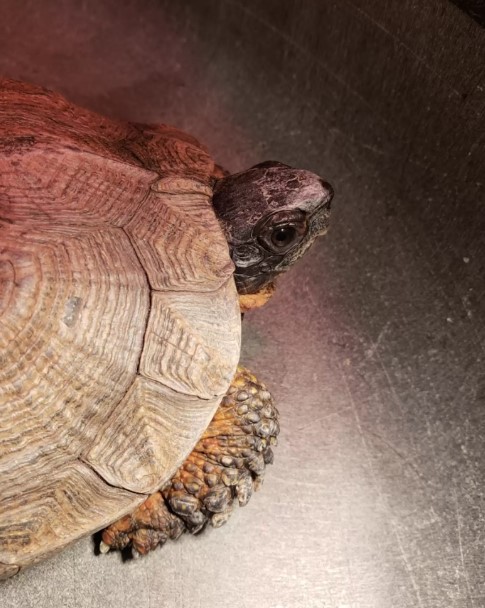
Newt began his training when he was still a young puppy. Hannah Duffy, an undergraduate student at SLU, Dr. Kris Hoffman, and a few other experienced trainers helped Newt quickly learn how to locate particular scents.
Sirois remarked, “His training began with being rewarded when he scented a tin containing birch. The game then evolved into finding concealed tins after picking out the scented tin from among empty tins.
One day, a football field was treated with a single drop of birch oil by Newt’s trainers. In less than a minute, Newt discovered the oil drop, and his team decided it was time to expose him to the aroma of a spadefoot toad.
Soon after, Newt began working on his first formal task: finding spadefoot toads for the Massachusetts Audubon.
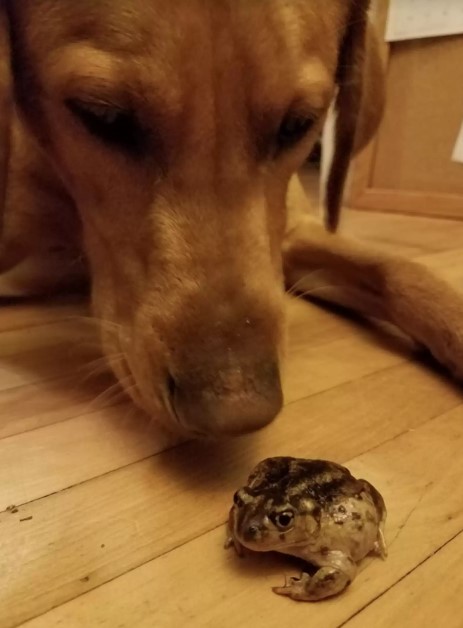
Sirois, Newt’s second student handler, chose to teach him how to discover uncommon turtles because Newt did so well on his spadefoot toad assignment. In parallel, according to Sirois, “biologists in Rhode Island were seeking to learn where threatened turtle species lived within the state.”
As a result, Newt and his handler joined the state-wide conservation initiative and started looking for turtles that were in danger of extinction.
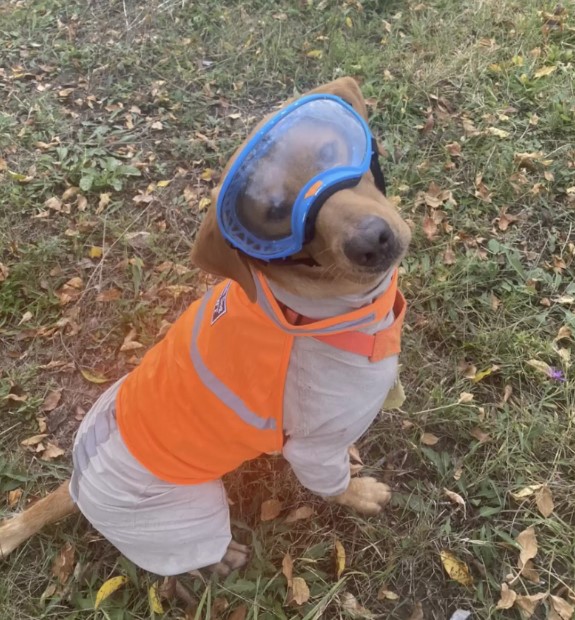
According to Sirois, “Newt helped locate new places with turtle species that are more in need of conservation or vulnerable.” “Dr. Hoffman predicted that we would discover a turtle on average once every three days, but we actually found one every day.
There are a few crucial things Newt does to protect himself and the turtles when it comes to informing his handlers about a new discovery.
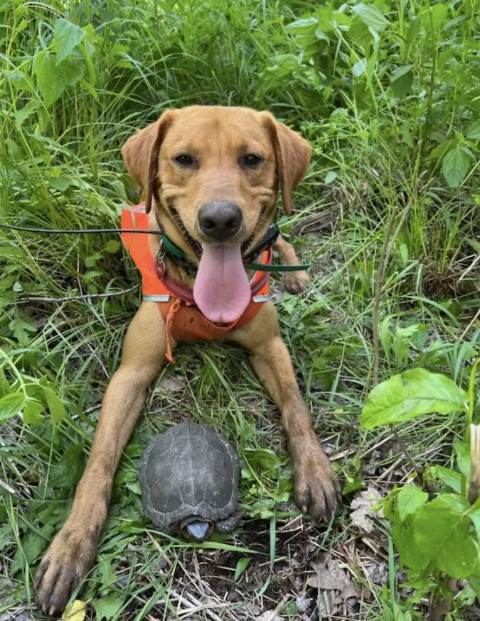
Sirois remarked, “When Newt discovers a turtle, he lays down facing it. The turtle is not picked up by him.
Sirois orders Newt to move his nose closer to the turtle if she can’t first see it he is alerting to.
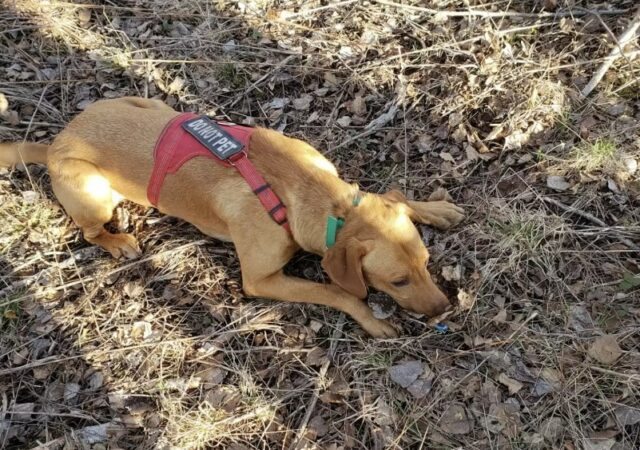
Once the turtle has been located, another member of the conservation team records his whereabouts, observes how he acts, and snaps photos of the distinctive pattern under his shell so they can identify the turtle once more during subsequent searches.
Sirois gives Newt his most desired toy once he successfully recognizes a turtle. Tennis balls are his favorite things in the world, according to Sirois. Even as a puppy, “he taught himself to throw the ball to others so that they would throw it quicker.”
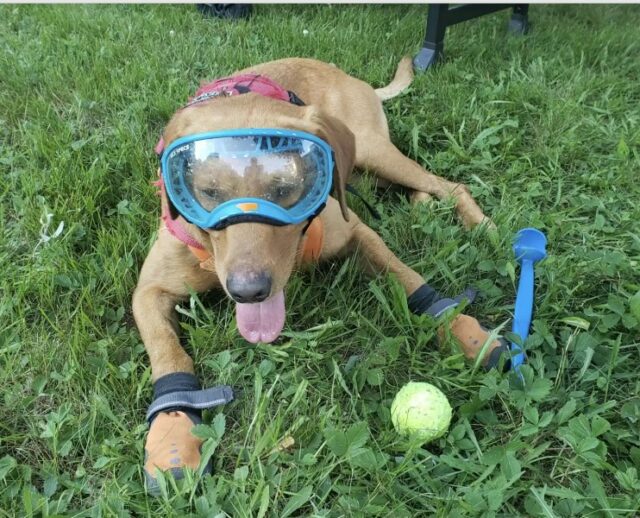
Sirois provides Newt the instruction “search” to continue exploring fresh territory after he has been trotting about contentedly with his ball for a while.
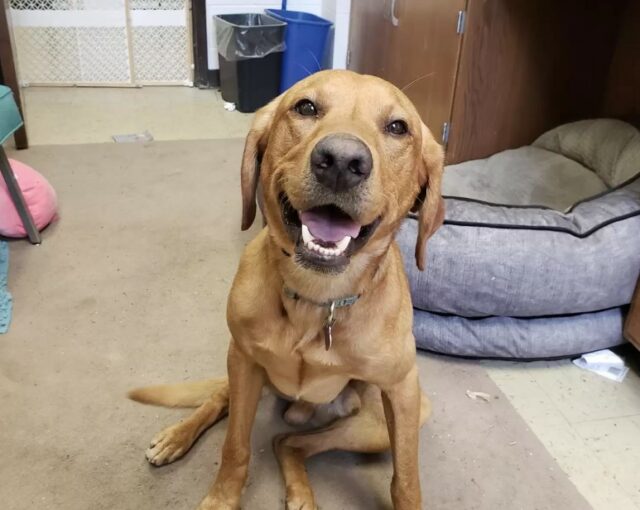
When Newt isn’t out in the field conducting searches, he’s generally at home playing with Dr. Hoffman or by her side at work. But his handler highlighted that tracking dogs are not the same as domestic pets.
Sirois described him as being very excited, high-energy, easily bored, a smart problem-solver, and lacking any regard for peace and quiet. Instead of acting like a typical pet Labrador retriever, he acts more like a police dog.
With the help of the cash they receive, SLU intends to expand its conservation program to include additional students and dogs in the near future.
A game-changer, according to Sirois, is the Recovering America’s Wildlife Act (RAWA). We could afford to pay the entire Newt turtle squad! ”