
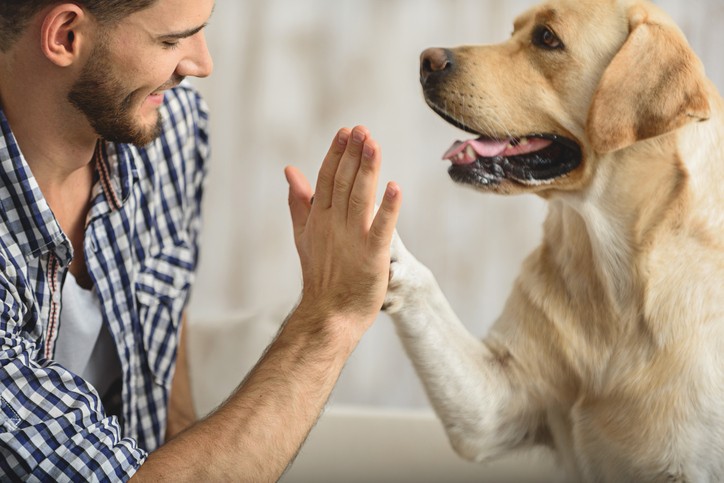
Dogs are amazing creatures, capable of understanding and responding to our verbal and nonverbal cues. They have a unique ability to read our body language and facial expressions, allowing them to better understand us and respond accordingly. This is why it is so important for us to be aware of the power of nonverbal communication when interacting with our canine companions.
Nonverbal communication is a form of communication that does not involve words or language. It includes body language, facial expressions, gestures, posture, eye contact, tone of voice, and other forms of physical expression. Dogs are particularly adept at reading these subtle cues and can use them to interpret our emotions and intentions.
For example, when we smile at our dog they may respond by wagging their tail or coming over for a cuddle. Similarly, if we frown or look away they may back off or become anxious. Our dogs also use their own body language to communicate with us; they may bark or whine when they want something or raise their hackles when they feel threatened. By learning how to interpret these signals we can better understand what our dogs are trying to tell us without having to rely on verbal commands alone.
In addition to using body language as a form of communication between humans and dogs, there are also other ways in which dogs use nonverbal cues to interact with one another. For instance, dogs may make eye contact with each other as a sign of submission or dominance; this is known as “staring” behavior. They may also sniff each other’s faces as an act of greeting or recognition; this is known as “sniffing” behavior. By understanding these behaviors we can better understand how our canine companions interact with one another and how we can best interact with them too!
The power of nonverbal communication in dogs should not be underestimated; it plays an essential role in helping us build strong relationships with our furry friends. By being aware of the subtle cues that both humans and dogs use during interactions we can ensure that our canine companions feel safe and secure around us while also building trust between us both. With this knowledge comes greater understanding which will ultimately lead to more fulfilling relationships between humans and their canine companions!